
This guide compares the pros and cons in plain terms so they can match the device to their routine, prescription, and budget.
What is a portable oxygen cylinder, and how does it work?
A portable oxygen cylinder stores compressed medical oxygen in a metal tank. They attach a regulator and usually a conserving device to control flow, then deliver oxygen through tubing and nasal cannula.
The big benefit is simplicity. The tradeoff is that once the tank is empty, it must be replaced or refilled.
What is a portable oxygen concentrator (POC), and how does it work?
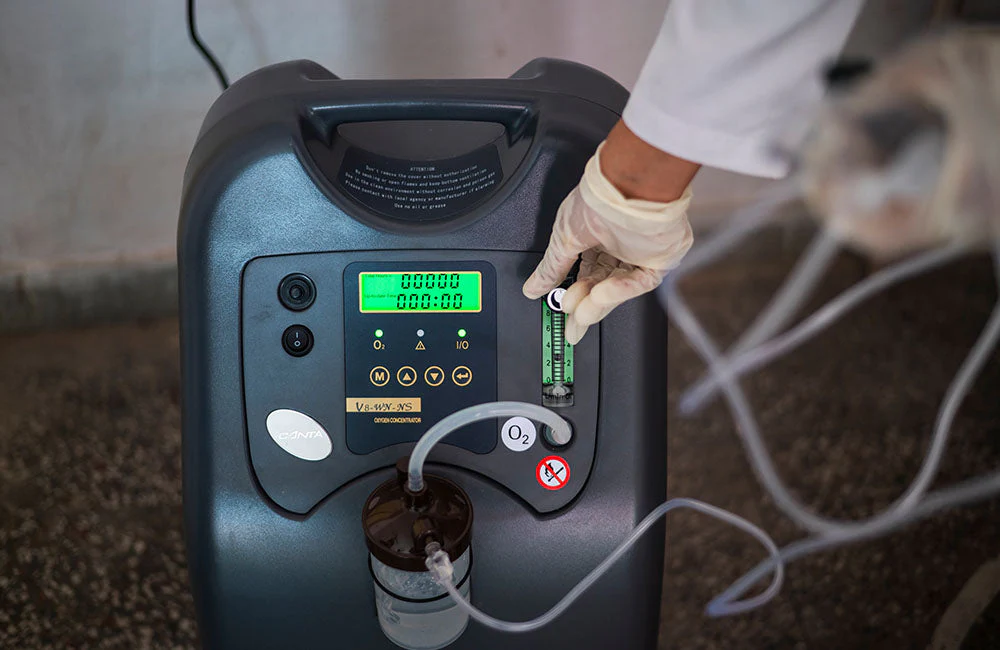
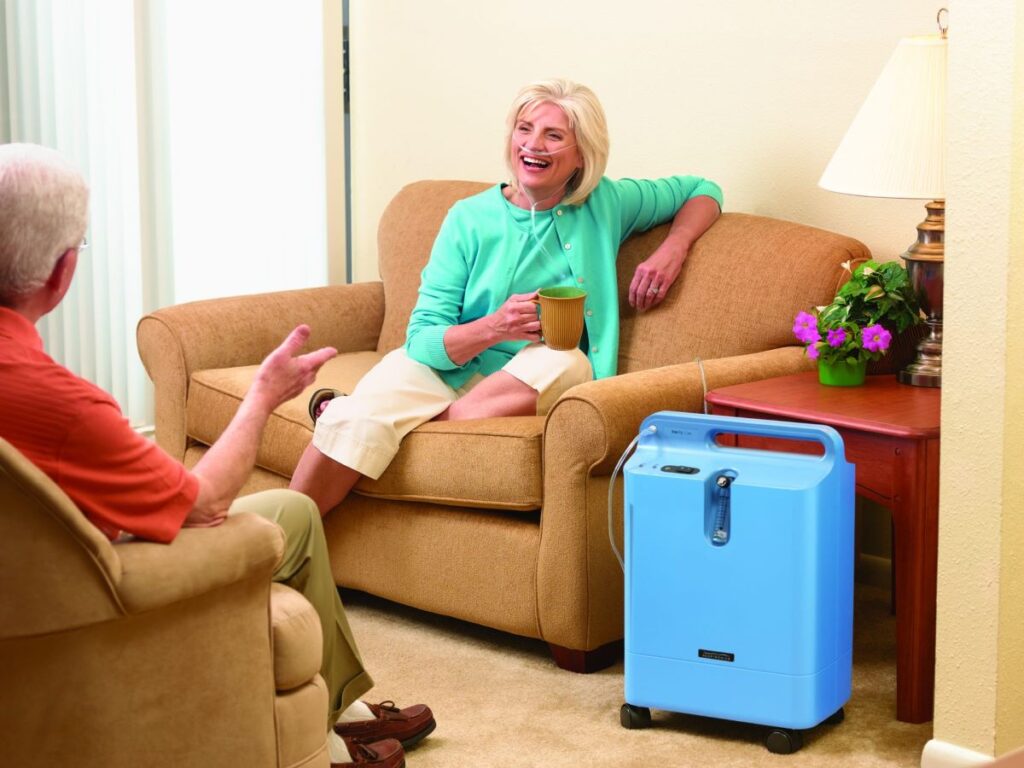
A POC makes oxygen on demand by pulling in room air and filtering out nitrogen. They run on a rechargeable battery, AC power, or DC car power, and deliver oxygen either continuously or in pulse dose depending on the model.
The main advantage is avoiding oxygen refills. The main constraint is power, battery time, and whether the unit matches their prescribed flow.
Which option is more portable for everyday use?
For short errands, many find small cylinders feel lighter in the hand, especially with a simple shoulder bag. But cylinder portability is tied to duration, so “portable” can become “multiple tanks” quickly.
POCs tend to be bulkier than the smallest tanks, yet they can stay portable all day if they have enough batteries and a place to charge. For someone who is out for long stretches, portability often means “no refills,” which favors a concentrator.
Which one lasts longer when they are away from home?
A cylinder’s runtime depends on tank size and flow setting, and it ends when the tank is empty. That makes planning straightforward, but unforgiving if they underestimate time or oxygen use.
A POC can run as long as power is available. With spare batteries, car charging, or access to outlets, they can extend use far beyond a single outing, although battery life still needs careful planning.
How do oxygen delivery modes affect the decision?
Many cylinders can provide continuous flow, which some people need during sleep or with higher oxygen demands. They can also be used with conserving devices that deliver oxygen in pulses to extend tank life.
Many POCs are pulse dose only, while some offer continuous flow but are heavier and have shorter battery runtimes. The key is whether the device can meet their prescription during rest, exertion, and sleep, not just at a low setting in a showroom.
What are the biggest pros of a portable oxygen cylinder?
Portable cylinders are predictable and widely supported. If they have reliable access to refills or swaps, cylinders can be a practical option.
Pros:
- Delivers true medical oxygen from a pressurized supply
- Often supports continuous flow, depending on setup
- Simple to use and quick to start
- No charging or batteries required
- Typically lower upfront cost than a POC
What are the biggest cons of a portable oxygen cylinder?
Cylinders are limited by the amount of oxygen in the tank. Their biggest risk is running out at the wrong time.
Cons:
- Finite runtime, then immediate need for refill or replacement
- Requires deliveries, refills, or store swaps, which can be inconvenient
- Heavier as they scale up to longer duration tanks
- Must be stored and transported safely because they are pressurized
- Travel can be harder because airline and public transport rules may apply
What are the biggest pros of a portable oxygen concentrator?
A POC offers independence from oxygen deliveries. For many, that single benefit outweighs the learning curve.
Pros:
- Produces oxygen from room air, so no refills
- Can support longer outings with batteries and charging options
- Generally easier for frequent travel, especially with FAA accepted models
- Less dependence on local oxygen supply infrastructure
- Useful as a primary mobility device for active daily life
What are the biggest cons of a portable oxygen concentrator?
POCs are not one size fits all. The wrong model can fail to meet needs during exertion or sleep.
Cons:
- Higher upfront cost, plus ongoing battery replacement costs
- Battery time can be limiting without spares or charging access
- Pulse dose may not work for everyone, especially during sleep or shallow breathing
- Continuous flow models can be heavier and still battery limited
- Performance varies by brand, altitude, and breathing pattern
Which is cheaper overall for them?
Upfront, cylinders and regulators often cost less than a POC. But recurring costs can add up if they need frequent refills, deliveries, or multiple tanks to cover a typical week.
A POC usually costs more at purchase, but may reduce ongoing oxygen supply expenses. The real comparison depends on how much oxygen they use, how often they leave home, and whether their insurance or supplier covers equipment and service.
Which is easier to maintain and troubleshoot?
Cylinders require basic checks: tank pressure, regulator function, and safe storage. Maintenance is mostly about logistics, making sure they have a full tank and a backup.
POCs require charging discipline, filter cleaning, and monitoring alarms. They also need a backup plan for power failures, dead batteries, or device servicing, since the unit is a single point of failure.
Which is better for travel, including flights and road trips?
For flights, many airlines only allow approved POCs, and cylinders are often restricted. That makes POCs the common choice for air travel, provided they plan battery hours according to airline rules.
For road trips, both can work. Cylinders offer dependable continuous flow and no charging needs, while a POC can be easier if they can charge in the car and avoid hunting for refills in unfamiliar areas.
What should they consider before choosing one?
They should start with their prescription and real life oxygen needs, then match features to situations they face every week.
A practical checklist:
- Required flow: continuous, pulse, or both
- Use cases: sleep, stairs, errands, long days out
- Runtime needs: typical longest outing plus buffer
- Backup plan: extra tanks or spare batteries
- Refill access versus charging access
- Weight, carrying comfort, and noise tolerance
- Travel plans and airline requirements
- Total cost over a year, not just purchase price
When does a cylinder usually make more sense?
A cylinder often fits best when they need continuous flow, want low upfront cost, or have reliable refill support. It can also make sense as a backup supply, even for people who mainly use a POC.
It is also a straightforward option for those who prefer simple equipment with minimal electronics. Read more about gas cylinder safety.
When does a concentrator usually make more sense?
A concentrator tends to fit best when they are frequently out of the house, travel often, or want independence from refills. It can be especially helpful when local refill logistics are unreliable.
It is also appealing for people who value a single device that can be charged at home, in a car, and in many public places.
How can they make the safest choice?
They should confirm, in writing, that the device can meet their prescription in all settings, including sleep and exertion. A supervised walk test or titration based on their clinician’s guidance is often the clearest reality check.
They should also keep a backup oxygen plan, because both systems can fail in different ways: cylinders can empty, and concentrators can lose power or require service.
More to Read : 5 Reasons to Choose Oxygen Concentrator Philips Models
FAQs (Frequently Asked Questions)
What is the difference between a portable oxygen cylinder and a portable oxygen concentrator (POC)?
A portable oxygen cylinder stores compressed medical oxygen in a metal tank and delivers it through tubing, while a portable oxygen concentrator (POC) produces oxygen on demand by filtering room air. Cylinders require refills or replacements once empty, whereas POCs run on rechargeable batteries or power sources and avoid the need for refills.
Which is more portable for everyday use: an oxygen cylinder or a POC?
Small oxygen cylinders can feel lighter and are convenient for short errands but require multiple tanks for longer use. POCs tend to be bulkier but can stay portable all day with sufficient batteries and charging options, making them better suited for extended outings without needing refills.
How do oxygen delivery modes affect the choice between cylinders and POCs?
Oxygen cylinders often provide continuous flow suitable for sleep or higher demands, and can use conserving devices to extend tank life. Many POCs offer pulse dose delivery, which may not suit everyone, though some models provide continuous flow but with heavier weight and shorter battery life. Matching the device’s delivery mode to the prescription during rest, exertion, and sleep is crucial.
What are the pros and cons of using a portable oxygen cylinder?
Pros include delivering true medical oxygen from a pressurized supply, supporting continuous flow, simplicity of use without charging needs, and typically lower upfront cost. Cons involve limited runtime requiring timely refills or replacements, logistical challenges with deliveries or swaps, increased weight for longer duration tanks, safety considerations due to pressurization, and travel restrictions on airlines or public transport.
What are the advantages and disadvantages of using a portable oxygen concentrator (POC)?
Advantages of POCs include independence from refills by producing oxygen from room air, suitability for longer outings with battery options, FAA acceptance facilitating air travel, reduced reliance on local oxygen infrastructure, and support for active daily mobility. Disadvantages include higher upfront costs plus battery replacements, limited battery time without spares or charging access, pulse dose limitations especially during sleep or shallow breathing, heavier continuous flow models with shorter battery life, and performance variability based on brand and conditions.
Which option is more cost-effective overall: an oxygen cylinder or a POC?
Oxygen cylinders generally have lower upfront costs but may incur higher ongoing expenses due to frequent refills, deliveries, or multiple tanks needed weekly. Portable oxygen concentrators usually require higher initial investment but can reduce long-term supply costs. The most cost-effective choice depends on individual oxygen usage patterns, frequency of leaving home, insurance coverage, and supplier support.